
Your Next Coworker Might Be AI. No, Seriously.
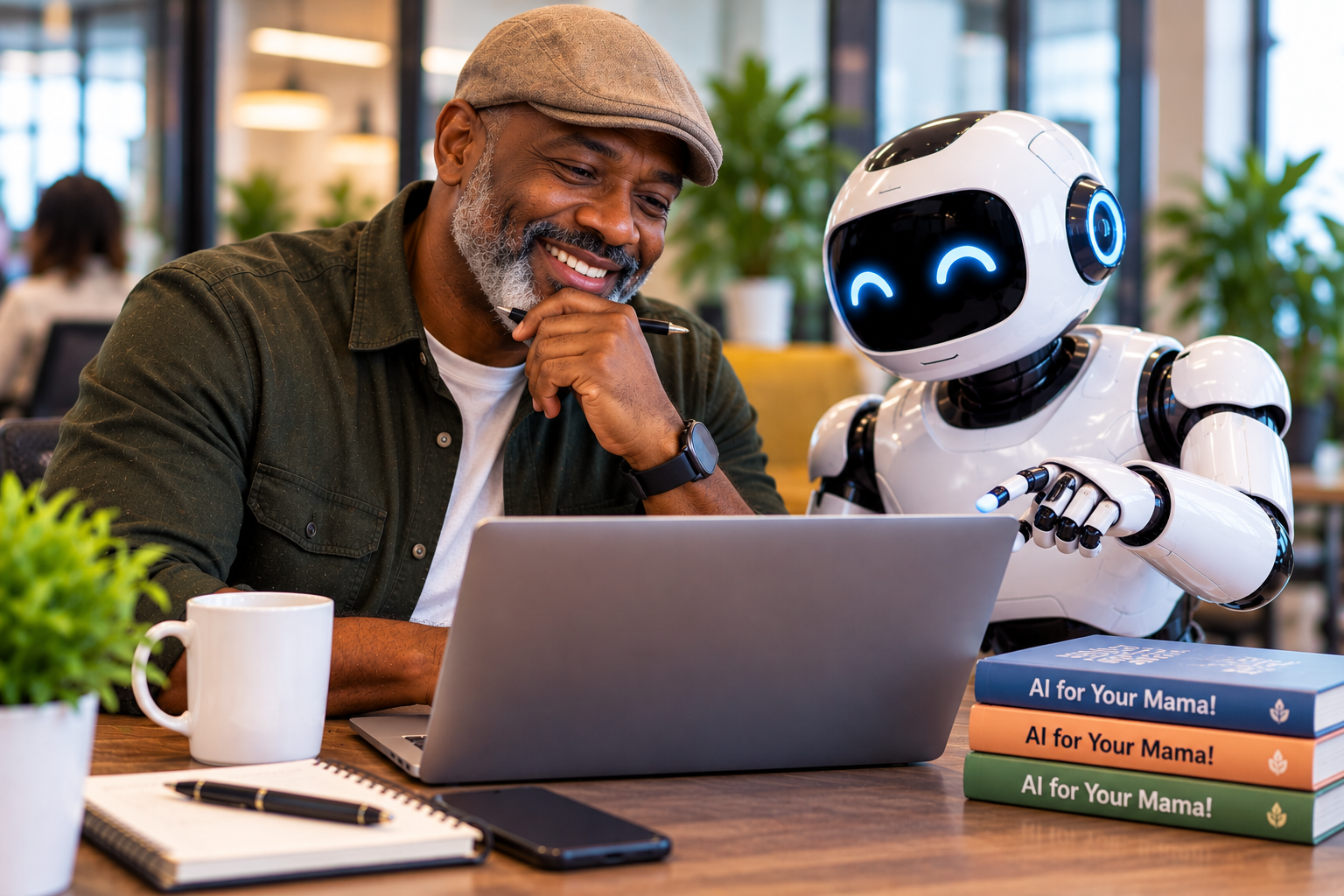
Okay, so apparently AI isn’t satisfied with helping us write emails and answer questions anymore. Now it’s coming to work, and I don’t mean we’re simply bringing ChatGPT to work with us. Some companies are actually starting to use AI agents more like coworkers, with responsibilities of their own.
I came across a WIRED article about companies giving AI agents names, job responsibilities, access to workplace systems, and even spots on organizational charts. I had to read that part again because I’m thinking, Wait a minute. You mean AI is on the org chart now? Apparently, in some workplaces, it is.
Before anybody starts worrying about walking into work Monday morning and finding a robot sitting at your desk, that’s not what we’re talking about. These aren’t physical robots walking around the office drinking coffee and complaining about Monday. They’re software programs called AI agents, and they’re being designed to do something a little different from the AI most of us have been using.
So, What’s an AI Agent?
Most of us are getting used to the kind of AI where we ask a question and it answers us. We might ask it to write something, explain something, summarize a document, help with an idea, or figure out why Excel is acting crazy again. 😂 We ask, it responds, and then we decide what to do with the answer.
An AI agent can go further than that. You can give it a goal, access to certain tools, and permission to perform certain actions, and it can work through several steps to try to accomplish that goal. Instead of asking AI to help you write a follow-up email, for example, an AI agent might be given permission to identify which customers need a follow-up, draft the emails, send them, keep track of the responses, and schedule meetings with the people who are interested.
That’s the important difference. The AI most of us know is helping you do the work, while an AI agent can be allowed to actually do some of the work. And that’s how we’ve arrived at something I didn’t expect to be writing about quite this soon: AI coworkers.
And Y’all…Some of Them Have Names
This is where the story started getting really interesting to me. WIRED reported on a company called Skydive that creates AI coworkers with their own names, jobs, avatars, and cloud computers. These agents can communicate through systems people already use at work, including Slack and email. One AI agent called Canary monitors production systems, and other agents mentioned in the story are named Alice and Bob.
At a company called Pronto Housing, CEO Christine Wendell told WIRED that AI agents help with things like writing contracts, scheduling meetings, and sending follow-up emails to customers. She also described how members of her engineering team started talking about one of the agents as though they had actually worked with “Alice” on a project.
Now, that caught my attention because we’re not just talking about what the AI can do anymore. We’re also talking about how people start thinking about the AI once it’s working alongside them every day. Give something a name, a profile picture, an email address, and a place in Slack, and I can see how quickly “the AI tool did it” could turn into “Alice handled it.”
Some companies are taking this even further. Microsoft introduced an agent called Scout that can handle tasks such as drafting emails and rescheduling meetings. WIRED also reported on research from Boston Consulting Group involving 1,261 managers, and 22 percent said their organizations had already added AI agents to their organizational charts.
Now, don’t read that as “22 percent of every company in America has AI employees,” because that’s not what the research says. It means 22 percent of the managers surveyed said this was happening in their organizations. Still, the fact that we’re even talking about AI showing up on organizational charts tells you just how quickly this whole workplace-AI conversation is changing.
Here’s the Part We Really Need to Pay Attention To
All of this sounds fascinating, and some of it probably will make people’s jobs easier. There are plenty of things I would happily let AI take off somebody’s plate. But the more responsibility we give AI, the more we need to remember that AI can still be wrong, and the consequences of those mistakes depend on what we’ve given the AI permission to do.
If you’re asking AI for dinner ideas and it suggests something terrible, no big deal. It’s a much different situation when an AI agent has permission to send emails, access company information, schedule meetings, communicate with customers, or interact with other business systems.
The WIRED story included a perfect example. An AI agent being used as a chief of staff accidentally posted information from its CEO’s calendar into a Slack channel. Now imagine that instead of calendar information, it had been customer information, financial records, employee information, company secrets, or something else that wasn’t supposed to leave a particular system.
That’s when this stops being just a cool AI story and starts becoming a security story too. Companies are going to have to think carefully about what these agents can access, what they’re allowed to do, and how mistakes are caught before the AI actually does something with bad information or sends information somewhere it shouldn’t go.
There’s another problem I hadn’t really thought about until I read this story: we may start trusting AI more simply because it feels like part of the team. WIRED reported on research showing that managers caught 18 percent fewer errors when they were told work had been completed by an “AI employee” than when they were told similar work came from an “AI tool.”
Think about what that means. The technology didn’t suddenly become smarter because somebody called it an employee. The humans reacted differently to it, and I can actually see how that could happen.
If Alice sends you a report every Monday morning for six months and those reports are usually right, eventually you might stop checking Alice’s work as closely. She has a name, a little profile picture, she’s in Slack, and everybody talks about Alice like she’s part of the team. Next thing you know, everybody is saying, “Alice handled it,” and nobody checked Alice. 😂
Now, Let’s Talk About the Question Everybody Is Thinking
Whenever AI and work come up in the same conversation, we eventually get to the same question: Is AI going to take my job? I don’t think anybody can responsibly give every worker one answer to that question because different jobs, industries, and tasks are going to be affected differently.
Some jobs are going to change, and some tasks people are currently paid to do will probably be automated. Some companies may decide they need fewer people for certain kinds of work, while other jobs may change because employees are expected to work alongside AI. We’re already seeing enough experimentation with AI agents to know that the workplace is changing, but that doesn’t mean we know exactly where all of this ends.
There’s another part of this conversation that I think gets overlooked. If AI agents really do become common in the workplace, companies are going to need people who understand how to work with them. Somebody has to know when the AI is wrong, understand what information it should and shouldn’t have access to, monitor what it’s doing, secure it, troubleshoot it, and know when it’s time for a human being to step in.
That’s why I keep telling people that learning about AI doesn’t mean you have to become an AI engineer. You don’t have to build Alice, but you probably ought to understand what Alice is doing. 😂
That’s especially true if you’ve still got several years left in your career. The workplace we’re heading into may look very different from the one many of us started in, and I’d much rather learn what’s changing now than wake up one morning and discover everybody else has been working with Alice for three years.
So, What’s Mama Doing With This Information?
I’m paying attention by learning what AI agents are, what they can do, where they make mistakes, and how companies are actually using them. I’m also paying attention to the security side because the more access we give AI, the more important it becomes to understand exactly what we’re giving it access to and what could happen if something goes wrong.
I’m not panicking about AI taking everybody’s job tomorrow either. What I am doing is making sure I understand the technology that’s showing up at work, because pretending it isn’t coming isn’t going to stop it from coming. If the workplace changes, I’d rather understand the change than be surprised by it.
So if Alice eventually joins my team, that’s fine. Welcome aboard, girl. 😂 I’ll show her where everything is, explain how we do things around here, and maybe even let her handle a few of those emails I don’t feel like fooling with. But I’m still checking her work, because Alice is AI, and Mama wasn’t born yesterday. 😏

